

Injection molding for transport & mobility
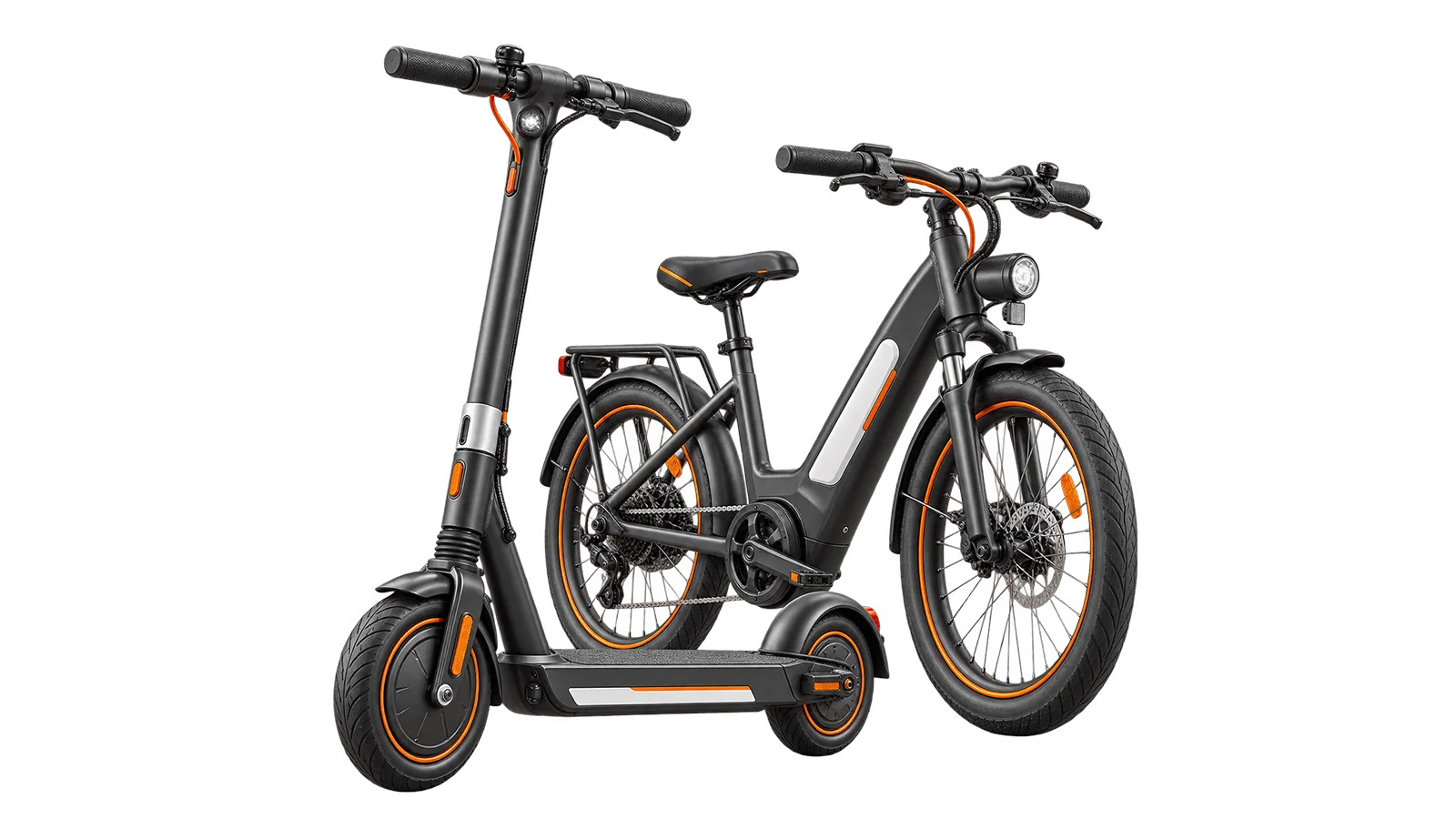
Plastics drive mobility
When speed meets rising requirements
Time-to-market pressure
High tooling costs
New material requirements
Validation close to series production
Documentation & approvals
From design to a part close to series production
Project communication made easier than ever
Registered on



Already listed
Materials tailored to the application
Flame retardancy & electrical safety
High strength & stiffness
Impact strength & protective function
Temperature & media resistance
Weathering & UV resistance
Precision & high-quality surfaces
Inserts & insert parts
Material examples
Faster to a part close to series production
Rapid tooling
Prototypes from 5 days
Series-like materials
FAQs on transport & mobility
Where can plastics reduce weight in mobility applications?
With suitable design, plastics can, for example, be used for housings, brackets, guides, covers or other functional parts. Whether a weight advantage is actually achieved depends on the material, the geometry and the component concept being replaced.
Can plastics replace metal components?
Yes, in suitable applications. Key factors include stiffness, strength, temperature, sustained load, impact loads and the required service life. For this reason, it is often necessary to consider not only the material, but the entire component concept.
Does priomold support material selection for mobility components?
Yes. We process almost all common engineering plastics and therefore have experience with a wide range of material properties and applications. Together, we consider factors such as temperature, media contact, mechanical loads and the requirements for the final component.
Can plastic and metal be combined in one component at priomold?
Yes. Using insert molding, for example, bushings, contacts, sheet metal parts or other insert parts can be overmolded directly. This enables plastic-metal hybrid components to be produced by injection molding already as prototypes or small series.
Can soft sealing or functional elements be integrated directly?
In principle, two- or multi-component technology can be used to combine hard thermoplastics with softer components such as TPE – for example, for sealing, grip or protective functions. Whether this is suitable for a specific component depends, among other things, on the geometry and the material pairing.
How can mobility components be tested at priomold before series production?
With rapid tooling, we produce real injection-molded parts early in the development process from series-like or intended materials. This allows you to check, for example, function, assembly, material behavior and part geometry, and incorporate findings into development even before the later series decision is made.

Or email Tobias at t.camek@priomold.de