Opens in a new tab

Injection Molding for Industry & Mechanical Engineering

Industries

Plastics Drive Industry & Mechanical Engineering
Industry & Mechanical Engineering
In mechanical and plant engineering, engineering plastics and high-performance polymers are crucial enablers for high-performance, reliable solutions. They enable lightweight design, reduce wear, are corrosion-resistant, lower friction, provide electrical insulation, and contribute to efficient motion and drive systems. Typical applications can be found in bearings, guides, gears, housings, conveyor technology, and handling systems – wherever precision, durability, and cost-effectiveness are required.
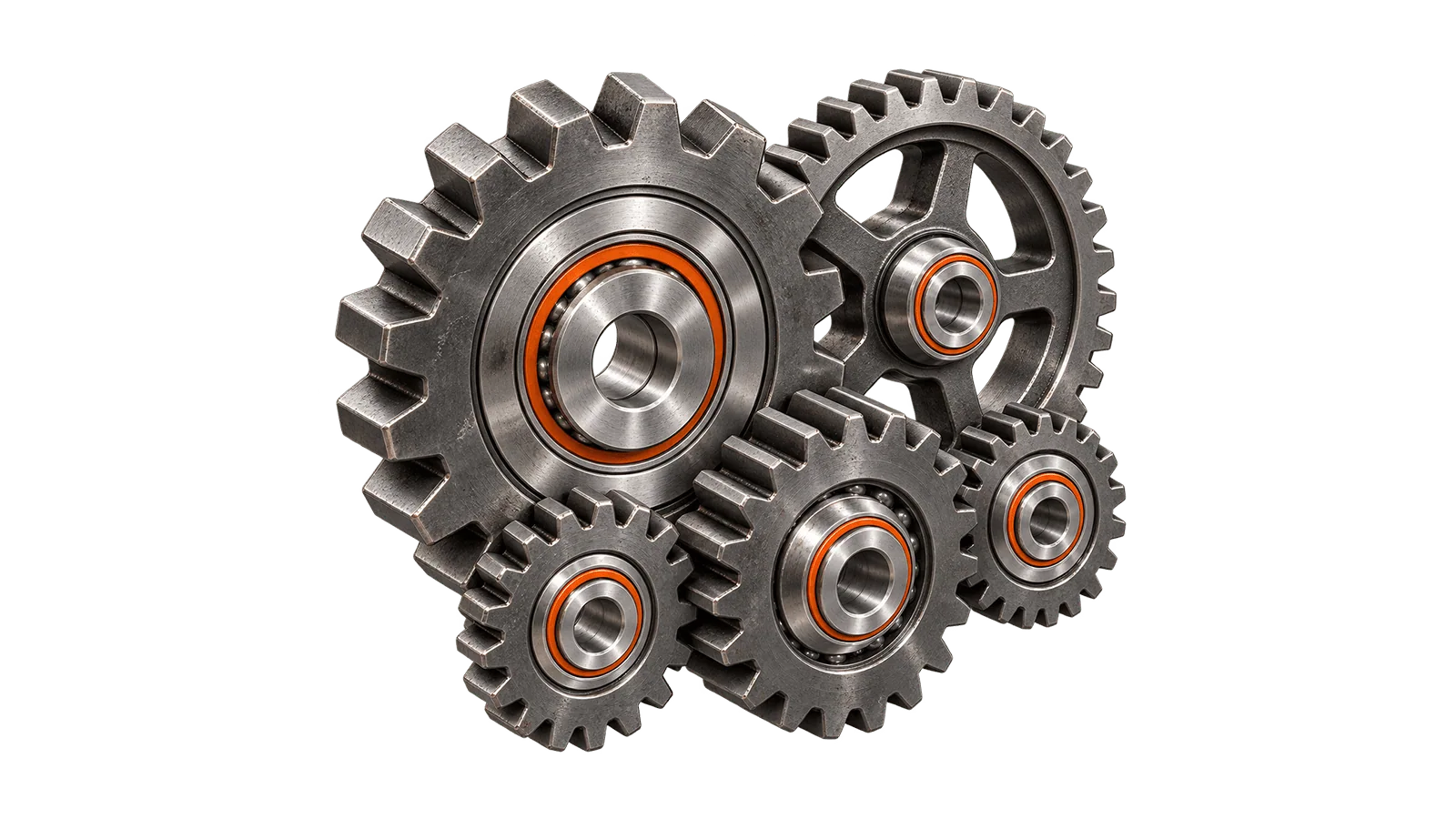
Gears as an example of technical plastic components in mechanical engineering
up to –80%
weight for selected polymer bearing solutions compared to metal bearings.
100%
lubricant-free with suitable self-lubricating polymer bearings.
up to 260°C
continuous use, using a PEEK type as an example.
23%
of global energy consumption is attributable to friction and wear.

When Continuous Load Meets Precision

Challenges in Development
In mechanical engineering, it's not the highest datasheet value that counts, but the behavior within the real system. Load, time, temperature, humidity, mating surfaces, lubricant, and the manufacturing process all interact. This is precisely why metallic design rules cannot simply be transferred to plastics; VDI 2016 provides dedicated procedures for thermoplastic components.

Wear & Friction

The plastic alone does not determine service life. Mating surface, surface finish, load, speed, and temperature together define the tribological system.

Dimensional Stability & Creep

Under continuous load and temperature, thermoplastics change their deformation behavior. Moisture can cause additional dimensional changes in materials such as PA.

Temperature & Media

Oils, coolants, cleaning agents, moisture, and process heat must be considered together with the mechanical load.

Load Peaks & Component Strength

Compressive, bending, impact, and static loads require robust material data and plastics-appropriate dimensioning rather than a pure one-to-one metal substitution.

Process Reliability & Tolerances

Injection molding, semi-finished product manufacturing, fiber orientation, and conditioning all influence the resulting properties. The same polymer name can therefore produce different component results.

Maintenance & Cost-Effectiveness

Self-lubricating sliding materials can reduce lubrication points and maintenance times – provided the material, mating surface, and load range are well matched.

From CAD to a Series-Identical Functional Part

With rapid tooling, aluminum molds, and injection molding in the intended production material, designs quickly become real components. This allows fit, load capacity, assembly, and function to be tested early, with optimizations fed directly into the next iteration.
Check Feasibility

Project Communication Made Easier Than Ever

Easy Collaboration
No forced tools. No unnecessary detours. No complicated coordination processes. We communicate with you in whatever way works best for you and your team – via Teams, WhatsApp, email, or directly through procurement platforms such as SAP Ariba, JAGGAER, or Cegedim. Because in the end, what matters to us is not which channel we use, but that information reaches the right place quickly – so your project moves forward and you hold your series-identical prototype in your hands sooner.

You Decide How We Communicate

The best communication channel? The one that works for you.
Microsoft Teams
Direct coordination with your project team.
WhatsApp
Quickly clarify a question or exchange information.
Email
For anything that should be documented in the traditional way.
Partner Platforms
SAP Ariba, JAGGAER, Cegedim, and other established procurement systems.

The Process Behind It Stays Simple, Too

We don't just want to manufacture quickly. We also want to make the path to the finished component as straightforward as possible.
Fast Onboarding
So we can get started together without a long ramp-up phase.
Direct Procurement Processes
We integrate with your existing purchasing and procurement processes.
Less Friction. More Speed.
Clear communication and well-established workflows ensure that decisions can be made faster.
Ready for a Partnership Without Detours?
We make getting started as easy as possible for you – in communication, purchasing, and throughout the entire project workflow.

Materials Matched to the Load

Material Expertise for Industry & Mechanical Engineering
In mechanical engineering, what matters is the interplay of material, load, temperature, environment, and manufacturing process. Whether it's a plain bearing, gear, guide, roller, seal, or structural functional part: the right plastic must not only be sufficiently strong, but also remain dimensionally stable, media-resistant, and economical to process throughout its entire service life.
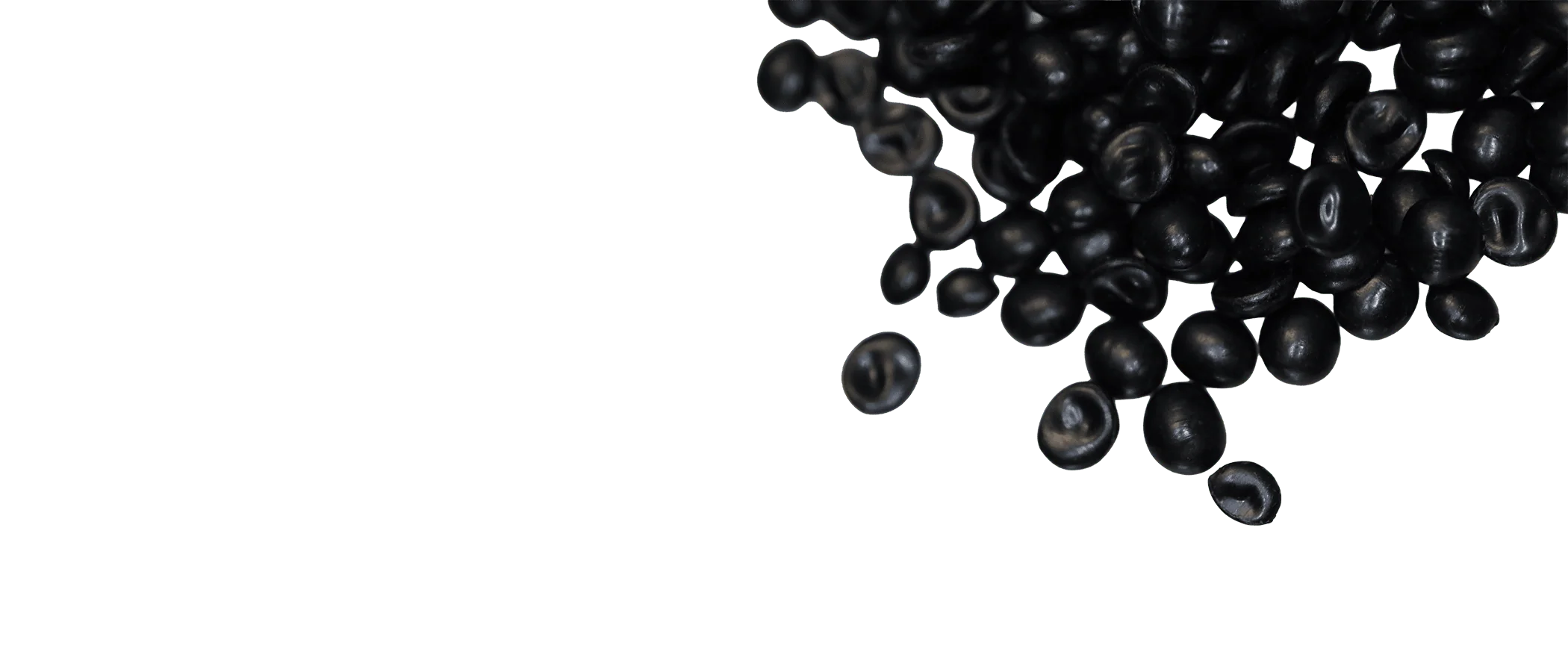
Black plastic granulate as raw material for manufacturing injection-molded parts

Wear & Abrasion Resistance

In guides, bearings, chain guides, and bulk material contact, material removal directly determines service life and tolerance. Tribological evaluation must be carried out under real load conditions.
Typical material options: POM, PEEK tribo-compounds, PAI, PTFE-modified compounds

Creep Resistance

Thermoplastics can deform over time under constant stress. This is critical for press fits, bolted connections, or permanent compressive loads.
Typical material options: PEEK, PAI, fiber-reinforced thermoplastics

Temperature Resistance

Mechanical properties decrease with rising temperature, depending on the material. Standard plastics are often insufficient for high-temperature applications.
Typical material options: PEEK, PAI, PPS

Oil, Coolant & Chemical Resistance

Machine components are frequently exposed to oils, greases, cooling media, cleaning agents, or process chemicals. The specific medium must be tested.
Typical material options: POM, PEEK, PPS, PAI depending on the medium

Impact Resistance & Vibration Damping

Plastics can offer advantages for moving or vibrating components due to their lower mass and material-specific damping properties.
Typical material options: PA, impact-modified thermoplastics

Electrical Insulation or ESD Function

Depending on the installation location, either insulation or controlled electrical dissipation is required. Modified conductive grades are also available.
Typical material options: PEEK, PPS, PA, POM, PEI; ESD-/CF-modified grades

Material Examples

POM · PA · PET/PBT · PEEK · PPS · PAI · PEI · reinforced and tribologically modified compounds.
Special Requirements for Your Component?
Together, we'll determine which material and solution best suit your component, load profile, and application.

Faster to a Series-Identical Component

Why priomold
When development time, cost, and reliability of results are critical, you need a partner who can respond quickly and flexibly. With rapid tooling, we combine short lead times with series-identical injection-molded parts – ideal for prototypes, testing, and small-batch production.

Rapid Tooling

Fast and Flexible Development
Our aluminum molds enable short tool lead times of between 2 and 8 weeks, depending on your priority, and quick adjustments during the development phase.

Prototypes in as Little as 5 Days

When Every Week Counts
For particularly urgent projects, the first injection-molded prototypes can be delivered within just one week.

Series-Identical Materials

Validate Under Realistic Conditions
We manufacture components using the intended production material, allowing function, feel, dimensional accuracy, and material behavior to be assessed realistically – much closer to the final application than with pure visual models.

FAQs on Industry & Mechanical Engineering

Frequently Asked Questions
Answers on material selection, component design, metal replacement, and technical plastic components.

This depends on mechanical load, temperature, media contact, wear, tolerances, and the required service life. Depending on the application, engineering or high-performance plastics as well as reinforced and functionalized compounds may be suitable.

Yes, in suitable applications. Plastic can reduce weight, prevent corrosion, or integrate additional functions directly into the component. What matters is that stiffness, strength, temperature, creep behavior, and the actual load case are all considered together.

We always consider the material in relation to function, load, geometry, and the injection molding process. With our experience across nearly all common engineering plastics, we can help select suitable materials while also taking injection-molding-appropriate component design into account.

Yes. Using insert technology, components such as threaded bushings, contacts, metal sheets, or other insert parts can be overmolded directly. This allows additional functions to be integrated and can reduce assembly effort.

Yes. Even before mold construction begins, we can review the design from a manufacturing perspective. Among other things, we check wall thicknesses, demoldability, undercuts, gating, and potentially critical geometries to improve feasibility early on.

Yes. We manufacture injection-molded prototypes and small series, from just a few components up to larger quantities. Through rapid tooling and our in-house mold making, we can execute projects quickly and provide real injection-molded parts early on for functional, material, and component testing.
Haven’t found the right answer yet?
Just write to us — we will be happy to help you!
Freigestelltes Porträt von Tobias Camek, Leiter Kundenmanagement bei priomold
Still Have Questions About Your Industrial Project?
Tobias is happy to help if you have questions about materials, component design, feasibility, or the implementation of your plastic component.
Tobias Camek
Head of Customer Management
Contact Tobias

Or email Tobias at t.camek@priomold.de

Quick response
Personal contact
Clear, straightforward answers