Injection molding for transport & mobility

Industries

Plastics drive mobility

Transport & mobility
In the mobility industry, plastics are a key enabler for lightweight design, efficiency and functionality. They help reduce weight, lower consumption and emissions, and at the same time deliver safe, durable components. Whether interior, exterior, electronics or e-mobility: the decisive factor is the right material solution for each application.
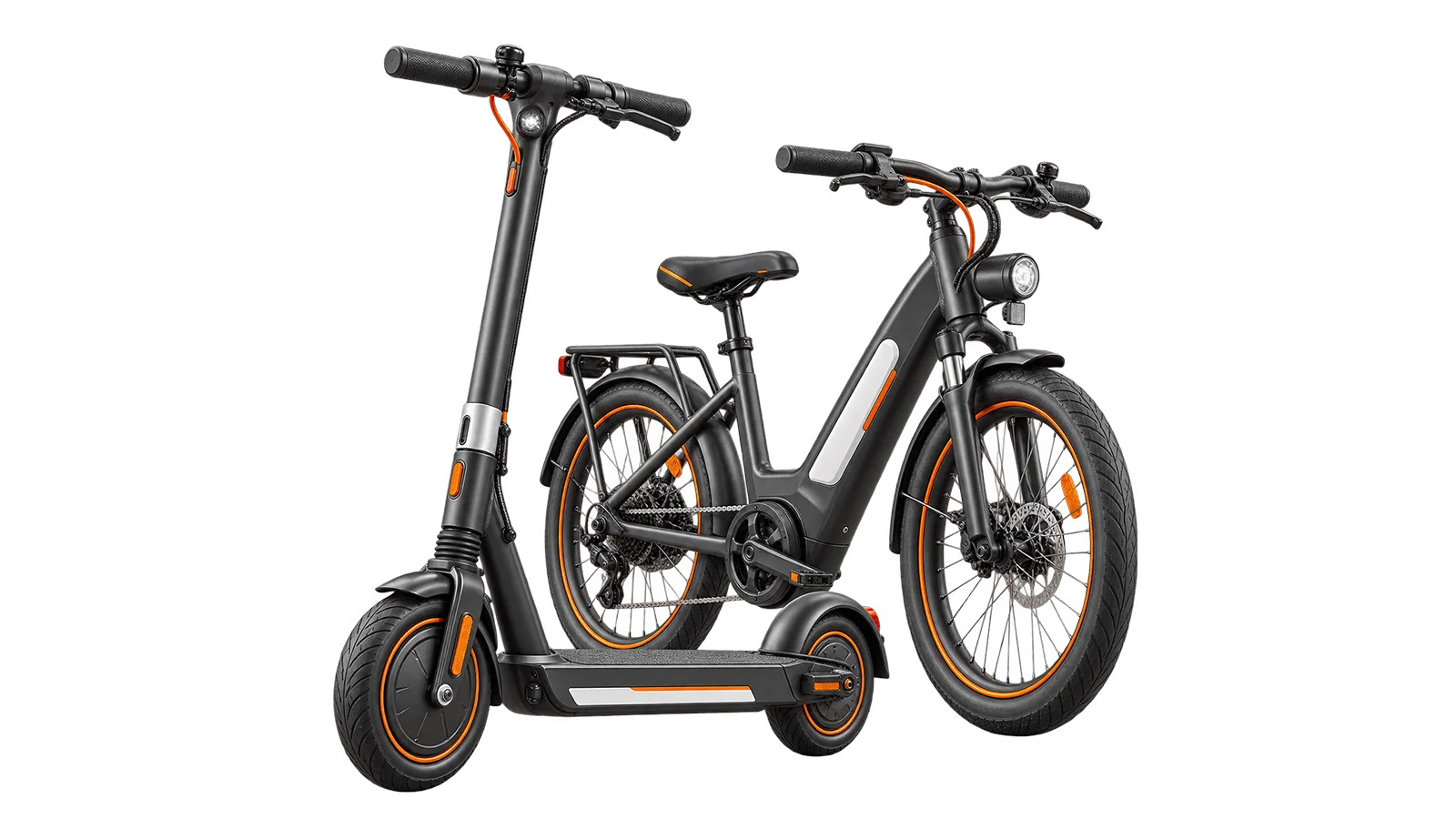
E-scooter and e-bike as examples of plastic components in modern mobility
150–200 kg
of plastic per vehicle.
up to 10 g/km
less CO₂ emissions through plastic-enabled lightweight design.
up to 50%
less weight than comparable metal components.
4.5 million t
of plastic annually for vehicle parts in Europe.

When speed meets rising requirements

Challenges in development
Development teams in transport and mobility must deliver robust results ever faster. At the same time, requirements for materials, validation, quality and documentation are increasing.

Time-to-market pressure

Short development cycles and rapid prototypes are crucial. However, speed must not come at the expense of quality, testing and product safety.

High tooling costs

Traditional steel tools are expensive and involve long lead times – especially critical when changes are still likely.

New material requirements

E-mobility requires heat-resistant, media-resistant, flame-retardant and reinforced plastics, as well as sound materials expertise.

Validation close to series production

Development teams need parts made from the series material to realistically assess function, dimensional accuracy and haptics.

Documentation & approvals

Initial samples and evidence must be produced under conditions as close to series production as possible to reliably support approval processes.

From design to a part close to series production

With rapid tooling, aluminum tools and injection molding in the intended series material, we support fast iterations, functional testing and robust validation – even with demanding materials.
Check feasibility

Project communication made easier than ever

Easy collaboration
No forced tools. No unnecessary detours. No complicated coordination processes. We communicate with you in the way that is easiest for you and your team – via Teams, WhatsApp, email, or directly through procurement platforms such as SAP Ariba, JAGGAER or Cegedim. Because in the end, what matters to us is not which channel we use, but that information quickly reaches where it is needed – so your project moves forward and you can hold your series-like prototype in your hands sooner.

Registered on

Quickly findable for purchasing and procurement
SAP Ariba logo
JAGGAER logo
Covisint logo

Already listed

We are already registered with key companies and platforms – for simple processes and strong connections.
Supplier numbers available
Already clearly registered with numerous well-known companies.
Also with major German automotive manufacturers
Trusted and registered with leading OEMs.
Fast onboarding & direct procurement processes
For efficient workflows and smooth collaboration.
Would you like to request us as a supplier?
We are already integrated and prepared for many procurement processes.

Materials tailored to the application

Materials expertise for transport & mobility
In the mobility industry, it is not the plastic alone that matters, but the interplay of material properties, part geometry and manufacturing process. We select and process materials to match the mechanical, thermal, electrical and optical requirements of your application.
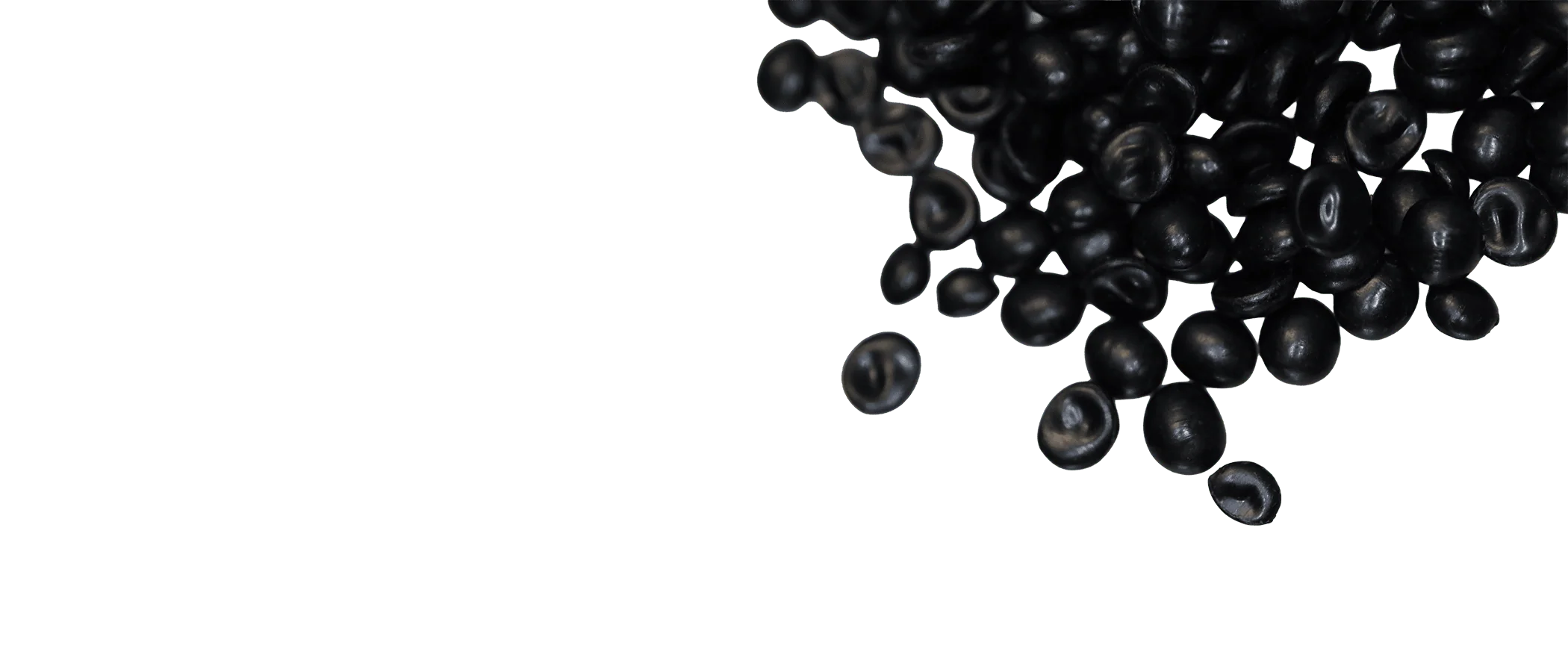
Black plastic granulate as raw material for manufacturing injection-molded parts

Flame retardancy & electrical safety

Suitable compounds for electronics, charging infrastructure and high-voltage environments – e.g., with UL 94 V-0 classification.

High strength & stiffness

Reinforced plastics for dimensionally stable, durable and lightweight components.

Impact strength & protective function

Robust materials for protective covers, housings and helmet components.

Temperature & media resistance

For applications involving heat, oils, fuels, coolants and technical media.

Weathering & UV resistance

Durable materials for outdoor components and mobile applications.

Precision & high-quality surfaces

For tight tolerances, good haptics, visual quality and visible components.

Inserts & insert parts

Metal inserts and hybrid part solutions integrated directly into the injection molding process.

Material examples

PP · PE · TPE · PA · PC · PBT · POM · PMMA · ABS/ASA · PC/ABS · PC/PBT · PEEK · reinforced and flame-retardant compounds.
Special requirements for your component?
Together, we will assess which material and which process best fit your application.

Faster to a part close to series production

Why priomold
When development time, costs and meaningful results are critical, you need a partner who can respond quickly and flexibly. With rapid tooling, we combine short lead times with injection-molded parts close to series production – ideal for prototypes, testing and small series.

Rapid tooling

Develop quickly and flexibly
Our aluminum tools enable short tooling lead times of between 2 and 8 weeks depending on your priority, and rapid adjustments during the development phase.

Prototypes from 5 days

When every week counts
For particularly urgent projects, the first injection-molded prototypes can be produced within a week.

Series-like materials

Validate under realistic conditions
We manufacture parts in the intended series material, enabling realistic assessment of function, haptics, dimensional accuracy and material behavior – significantly closer to the series application than purely visual models.

FAQs on transport & mobility

Frequently Asked Questions
Answers on lightweight design, durability, media resistance and function-integrated plastic components for mobility applications.

With suitable design, plastics can, for example, be used for housings, brackets, guides, covers or other functional parts. Whether a weight advantage is actually achieved depends on the material, the geometry and the component concept being replaced.

Yes, in suitable applications. Key factors include stiffness, strength, temperature, sustained load, impact loads and the required service life. For this reason, it is often necessary to consider not only the material, but the entire component concept.

Yes. We process almost all common engineering plastics and therefore have experience with a wide range of material properties and applications. Together, we consider factors such as temperature, media contact, mechanical loads and the requirements for the final component.

Yes. Using insert molding, for example, bushings, contacts, sheet metal parts or other insert parts can be overmolded directly. This enables plastic-metal hybrid components to be produced by injection molding already as prototypes or small series.

In principle, two- or multi-component technology can be used to combine hard thermoplastics with softer components such as TPE – for example, for sealing, grip or protective functions. Whether this is suitable for a specific component depends, among other things, on the geometry and the material pairing.

With rapid tooling, we produce real injection-molded parts early in the development process from series-like or intended materials. This allows you to check, for example, function, assembly, material behavior and part geometry, and incorporate findings into development even before the later series decision is made.
Haven’t found the right answer yet?
Just write to us — we will be happy to help you!
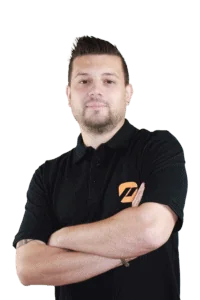
Freigestelltes Porträt von Tobias Camek, Leiter Kundenmanagement bei priomold
Any further questions about your mobility project?
Tobias will be happy to help if you have questions about lightweight design, materials, hybrid components or the feasibility of your application.
Tobias Camek
Head of Customer Management
Contact Tobias

Or email Tobias at t.camek@priomold.de

Quick response
Personal contact
Clear, straightforward answers