Injection Molding for Factory Planning & Production Management

Industries

Plastic Makes Production Adaptable

Factory Planning & Production Management
Modern production systems must adapt quickly to new products, variants, and processes. Engineering plastics support this adaptability with lightweight intralogistics solutions, low-wear guide elements, low-maintenance bearing points, and functional components for sensitive production environments. ESD properties and digital identification expand the spectrum for networked production systems.
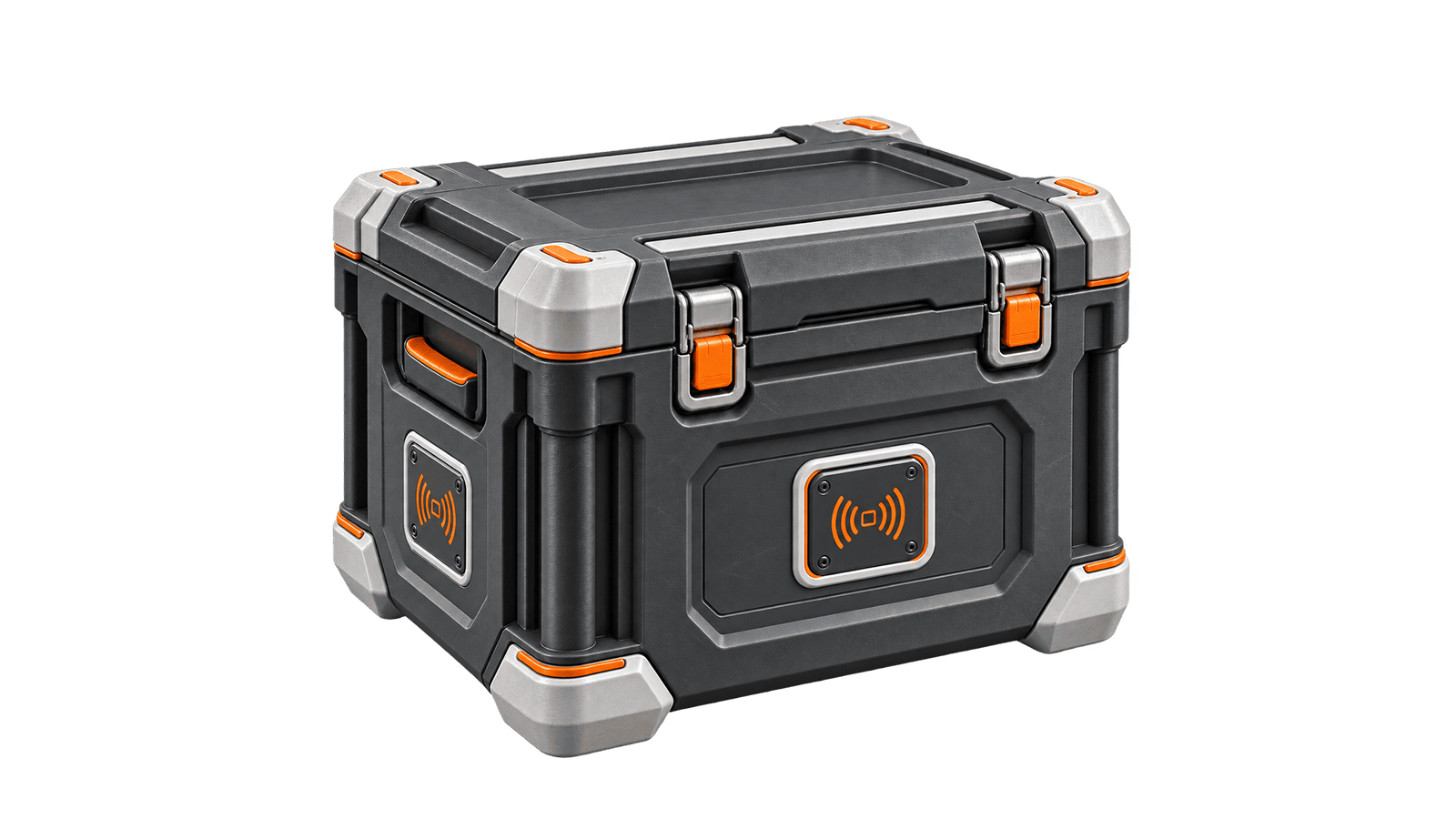
Robust load carrier with identification technology for material flow and intralogistics
1,560 h
less lubrication effort per year thanks to plastic bearings in a beverage production plant.
up to 30%
lower drive traction in the conveyor system with friction-optimized material compared to standard PE-UHMW.
RFID-ready
Digitally identifiable load carrier.
up to 1:125
Dead weight to dynamic load capacity for selected plastic load carriers.

When Production Needs to Change

Development Challenges
Today, production systems must be not only efficient but also adaptable. New variants, changing quantities, and increasing requirements for availability and traceability are transforming material flow and production equipment. Components must therefore be easy to integrate, precise, durable, and tailored to the respective production environment.

Adaptability & Variety of Variants

New products, quantities, and process sequences are constantly changing production systems. Fixtures, guides, and material flow components must therefore be able to be adapted or replaced efficiently.

Material Flow & Space Utilization

Material must be available at the right process step at the right time. Conveyor paths, buffers, load carriers, and returns therefore influence the layout and usable production area.

Availability & Maintenance

Wear, lubrication, and unplanned interventions have a direct impact on productivity. Low-friction and maintenance-friendly components can help reduce downtime and service effort.

Precision & Repeatability

Workpiece carriers, fixtures, and guide elements must position components reproducibly. Dimensional stability, tolerances, and wear thus become directly relevant to production.

Ergonomics & Handling

Manually moved carriers, fixtures, and assembly aids should be functional and easy to handle at the same time. Low masses can relieve employees and simplify movement sequences.

ESD, Purity & Component Protection

Electronics, battery, or cleanroom production places additional demands on conductivity, particle emission, and contamination control. Material and production environment must be considered together.

From Requirement to Application-Ready Component

With rapid tooling and injection molding in the intended series material, we quickly bring guides, fixtures, handling, and material flow components into the real production environment. This allows handling, fit, integration, and function to be tested early and further developed in a targeted manner.
Check Feasibility

Project Communication Easier Than Ever

Easy Collaboration
No tool constraints. No unnecessary detours. No complicated coordination processes. We communicate with you in the way that is easiest for you and your team – via Teams, WhatsApp, email, or directly via procurement platforms such as SAP Ariba, JAGGAER, or Cegedim. Because in the end, what matters to us is not which channel we use, but that information arrives quickly where it is needed – so that your project moves forward and you hold your series-like prototype in your hands faster.

You Decide How We Communicate

The best communication channel? The one that works for you.
Microsoft Teams
Direct coordination with your project team.
WhatsApp
Quickly clarify a question or exchange information.
Email
For everything that should be documented classically.
Partner Platforms
SAP Ariba, JAGGAER, Cegedim, and other established procurement systems.

The Process Behind It Also Remains Simple

We don't just want to manufacture quickly. We also want to make the path to the component as uncomplicated as possible.
Fast Onboarding
So that we can start together without a long lead-in phase.
Direct Procurement Processes
We integrate into your existing purchasing and procurement processes.
Less Friction. More Speed.
Clear communication and well-established processes ensure that decisions can be made faster.
Ready for a partnership without detours?
We make the start as easy as possible for you – in communication, in purchasing, and throughout the entire project process.

Materials for Flexible Production Systems

Material Expertise for Factory Planning & Production Management
Material flow, handling, and the production environment place different demands on the material. Low weight, wear behavior, dimensional stability, and impact strength can be just as decisive as ESD properties or resistance to cleaning and environmental influences. Engineering plastics and functionalized compounds make it possible to tailor these properties specifically to the respective production task.
Black plastic granulate as raw material for manufacturing injection-molded parts

Lightweight & Resilient

Low component mass can facilitate the handling of carriers, fixtures, and production components. Reinforced plastics simultaneously enable high mechanical resilience.

Wear-Resistant & Low-Friction

Sliding guides, bearing points, and conveyor components benefit from friction and wear behavior tailored to movement, load, and counter-rotating partners.

Dimensionally Stable & Precise

Workpiece fixtures, positioning elements, and guide components must reliably maintain their geometry. Humidity, temperature, continuous load, and tolerances must therefore be considered when selecting materials.

Impact-Resistant & Damping

Containers, carriers, and handling components are repeatedly moved, gripped, and loaded. Suitable plastics can absorb impact stress and dampen noise or vibrations.

ESD-Capable & Dissipative

Specially modified plastics are available for electronics and sensitive production areas, with which electrostatic charges can be dissipated in a controlled manner.

Clean & Environmentally Resistant

Cleaning, chemicals, particle requirements, or sensitive production conditions can place additional demands on the material and surface. The suitability of the specific grade for the real environment is decisive.

Material Examples

POM · PA · PE · PP · PBT · PC · PC/ABS · PPA · PPS · PEEK · PEI · TPE/TPU · GF/CF-reinforced, tribological, and ESD-modified compounds.
Special requirements for your component?
Together, we will check which material and which process fits your application in factory planning & production management.

FAQs on Factory Planning & Production Management

Frequently Asked Questions
Answers regarding plastic components for material flow, production equipment, intralogistics, and sensitive production environments.

Typical fields of application are sliding guides, rollers, bearing points, containers, load carriers, stops, or positioning elements. Which solution is suitable depends, among other things, on load, movement, wear, and the respective production environment.

Friction- and wear-optimized plastics can reduce lubrication points or enable dry-running movements if designed appropriately. However, whether this reduces maintenance effort must be evaluated for the specific application.

Yes. We consider component geometry, load, movement, and material together. This allows us to check where plastic can reduce weight without losing sight of the required stability and function of the component.

Yes. Specially modified plastics can have conductive or dissipative properties. It is crucial that the respective material and its resistance range fit the ESD protection concept of the application.

Yes. Components can already be designed constructively for RFID components, markings, barcodes, or other functional elements. We can include such requirements early in the component and tool design and check their feasibility for injection molding.

3D data or drawings as well as information on function, load, movement, tolerances, production environment, and desired quantity are most helpful. In addition, information on ESD, cleaning, or media requirements is important. On this basis, we can evaluate material, geometry, and injection moldability together.

Haven’t found the right answer yet?
Just write to us — we will be happy to help you!
Freigestelltes Porträt von Tobias Camek, Leiter Kundenmanagement bei priomold
Any more questions about your production project?
Tobias will be happy to help you if you have questions about material, material flow, production components, or the feasibility of your application.
Tobias Camek
Head of Customer Management
Contact Tobias

Or write to Tobias at t.camek@priomold.de

Quick response
Personal contact
Clear, straightforward answers