Injection Molding for Automation & Robotics

Industries

Plastic brings movement to automation
Automation & Robotics
Where robots become faster, more precise, and more flexible, every gram of moving mass counts. Engineering plastics take on central functions in bearings, joints, gears, grippers, guides, energy supplies, and housings. They can reduce moving mass, minimize wear, and reliably support complex movements.
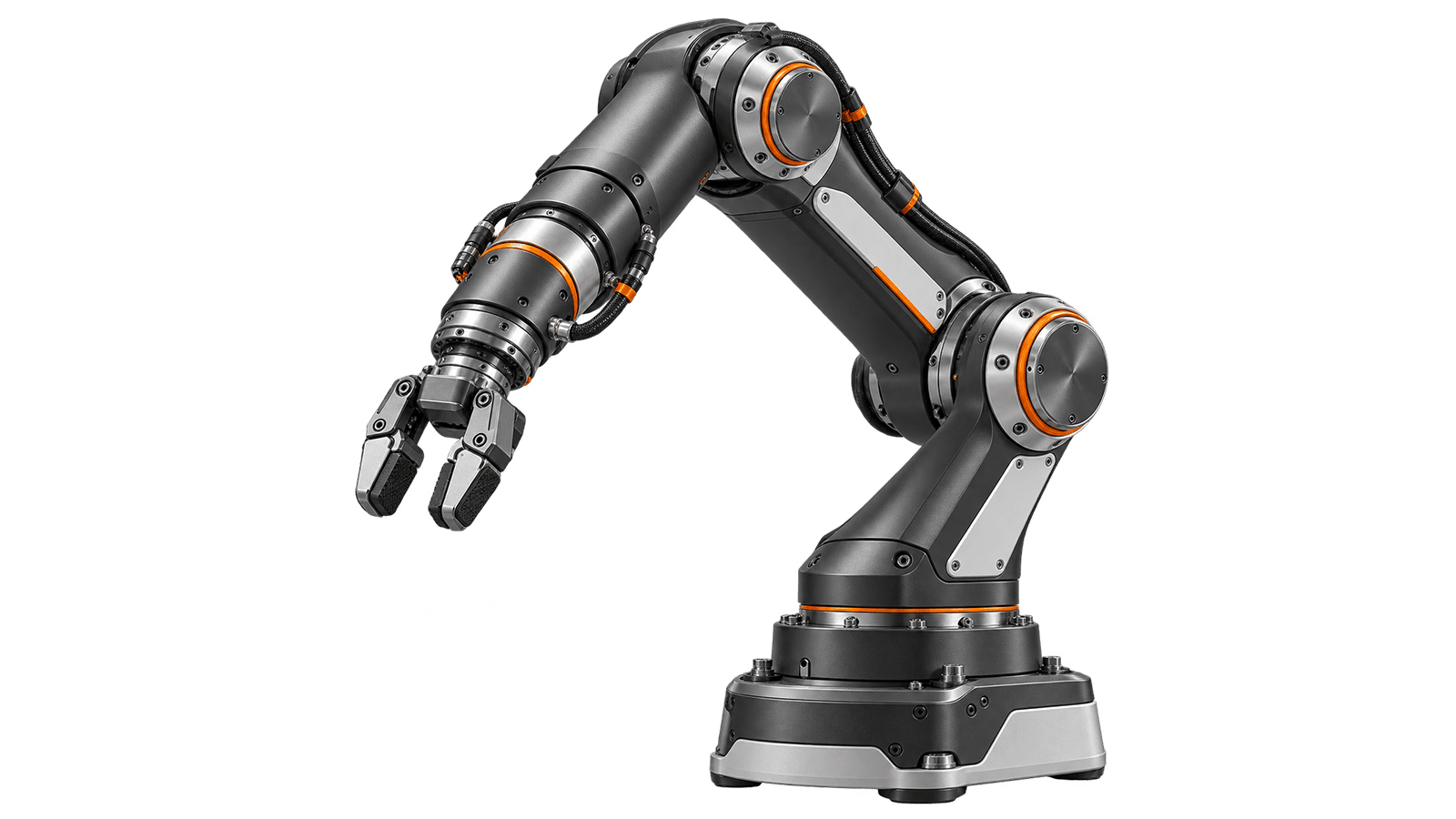
Industrial robot as an example of plastic components in robotics and automation
4.66 million
Industrial robots in use worldwide.
up to –80%
weight reduction for polymer bearings compared to metal.
360°
freedom of movement with 3D plastic energy chains.
> 2x
more annual robot installations than ten years ago.

When every movement must be perfect

Development Challenges
Robotics thrives on repeatability, dynamics, and availability. At the same time, acceleration, changing loads, friction, temperature, and environmental factors act on every component. Material, design, and the manufacturing process must therefore work together to ensure that precision and function are maintained even in continuous operation.

Dynamics & Moving Mass

Every gram on a moving system influences inertia and dynamics. Especially on robot arms and grippers, lightweight construction becomes a functional requirement.

Precision & Repeatability

Gripping, positioning, and joining require reproducible geometries. Temperature, humidity, load, and material behavior must not alter precision in an uncontrolled manner.

Wear & Continuous Motion

Bearings, joints, guides, and gears are in permanent motion. Friction and wear affect precision, service life, and system availability.

Cables in Motion

Power, data, and media must reliably follow complex multi-axis movements. Torsion, bending radius, and abrasion thus become part of the design.

Human & Robot

In collaborative applications, the robot, gripper, workpiece, and environment must be considered together. Mass, geometry, and surface can be safety-relevant.

Environment & Cleanliness

Dust, moisture, chemicals, ESD, or cleanroom requirements change the material profile. The material must suit the actual operating environment.

From Design to Moving Functional Part

With Rapid Tooling and injection molding using the intended production material, we quickly bring gripper, guide, and motion components into real-world application. This allows fit, movement, precision, and function to be tested early and designs to be optimized in short cycles.
Check Feasibility

Project communication easier than ever before

Easy Collaboration
No tool constraints. No unnecessary detours. No complicated coordination processes. We communicate with you in the way that is easiest for you and your team – via Teams, WhatsApp, email, or directly via procurement platforms such as SAP Ariba, JAGGAER, or Cegedim. Because in the end, what matters to us is not which channel we use, but that information reaches where it is needed quickly – so that your project moves forward and you hold your production-like prototype in your hands sooner.

You decide how we communicate

The best communication channel? The one that works for you.
Microsoft Teams
Direct coordination with your project team.
WhatsApp
Quickly clarify a question or exchange information.
Email
For everything that requires classic documentation.
Partner Platforms
SAP Ariba, JAGGAER, Cegedim, and other established procurement systems.

The process behind it also remains simple

We don't just want to manufacture quickly. We also want to make the path to the component as uncomplicated as possible.
Fast Onboarding
So that we can start together without a long lead-in phase.
Direct Procurement Processes
We integrate into your existing purchasing and procurement processes.
Less friction. More speed.
Clear communication and well-established processes ensure that decisions can be made faster.
Ready for a partnership without detours?
We make getting started as easy as possible for you – in communication, purchasing, and the entire project process.

Materials for Precise Movement

Material Expertise for Automation & Robotics
In robotics and automation, a material must enable movement without becoming a limiting factor itself. Low mass, wear resistance, dimensional stability, and controlled friction behavior are just as crucial as resistance to temperature, media, and the respective production environment.
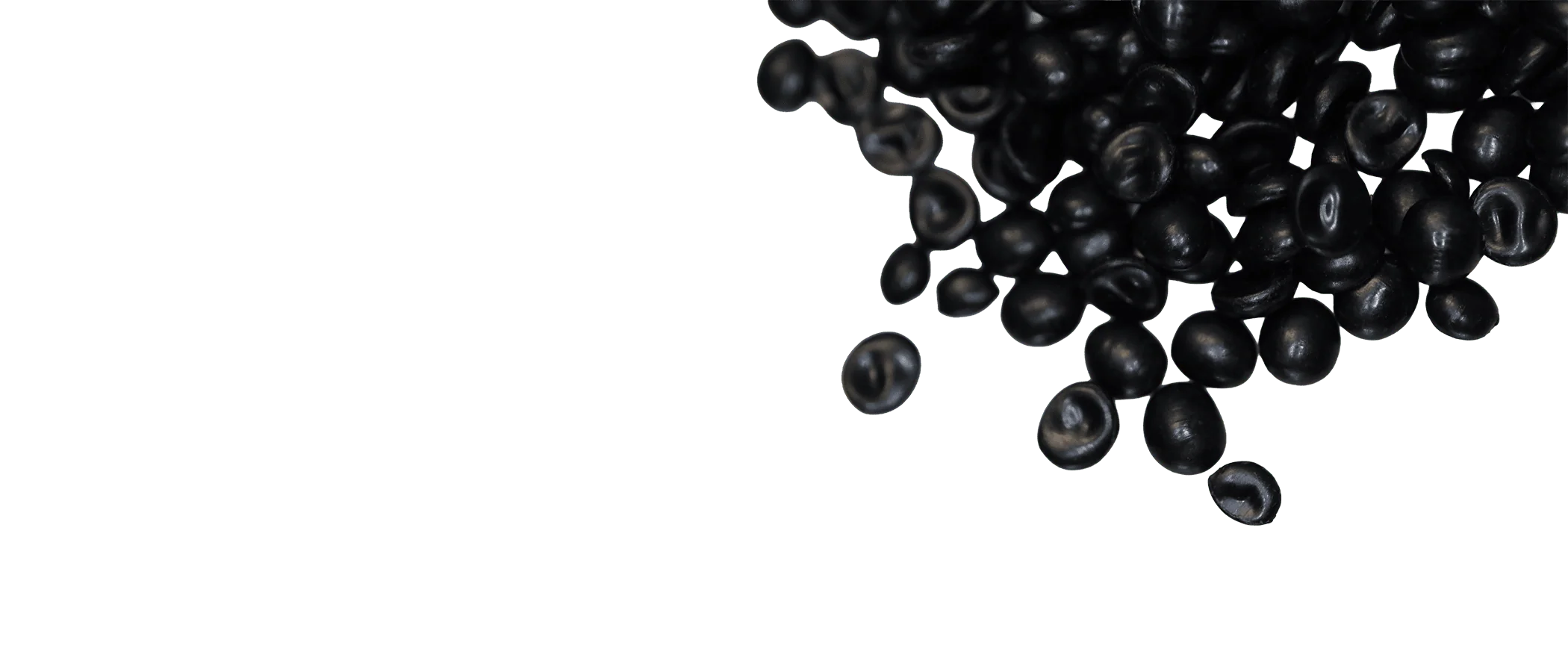
Black plastic granulate as raw material for manufacturing injection-molded parts

Lightweight & Heavy-Duty

Low moving mass reduces inertia and supports dynamic movements – especially for robot arms, grippers, and end-of-arm components.

Wear-Resistant & Low-Friction

Bearings, joints, guides, and gear parts require controlled friction and high wear resistance over many movement cycles.

Dry Running & Self-Lubrication

Tribologically optimized plastics can enable movement points without external lubrication, thereby reducing maintenance effort and lubrication points.

Dimensional Stability & Shape Retention

Precise grippers, guides, and functional parts must reliably maintain their geometry even under load, temperature, and changing environmental conditions.

Damping & Smooth Running

Suitable plastics can reduce noise and vibrations, contributing to controlled movement behavior of bearings, guides, and gears.

Resistant in the Operating Environment

Temperature, humidity, chemicals, dust, ESD, or cleanroom requirements help determine which material is suitable for the respective automation task.

Material Examples

POM · PET · PA · PBT · PPA · PPS · PEEK · PEI · TPE/TPU · GF/CF-reinforced and tribologically modified compounds.
Special requirements for your component?
Together, we will check which material and which solution suit your component, load case, and area of application.

Faster to the Production-Like Component

Why priomold
When development time, costs, and validity are crucial, you need a partner who can react quickly and flexibly. With Rapid Tooling, we combine short lead times with production-like injection-molded parts – ideal for prototypes, tests, and small series.

Rapid Tooling

Develop quickly and flexibly
Our aluminum tools enable short tool lead times between 2 and 8 weeks depending on your priority, and quick adjustments during the development phase.

Prototypes from 5 days

When every week counts
For particularly urgent projects, the first injection-molded prototypes can be realized within just one week.

Production-Like Materials

Validate under realistic conditions
We manufacture components in the intended production material, so that function, haptics, dimensional stability, and material behavior can be realistically evaluated – significantly closer to the production application than with pure visual models.

FAQs on Automation & Robotics

Frequently Asked Questions
Answers regarding lightweight, precise, and low-wear plastic components for dynamic applications.

Typical applications range from guide, bearing, and sliding elements to gripper components and housings, as well as functional parts in moving assemblies. Crucial for the design are movement, load, speed, and the respective operating environment.

Due to the lower density of many plastics, the weight of moving components can be significantly reduced with a suitable design. Especially for grippers, handling elements, or fast-moving assemblies, a lower mass can offer advantages for dynamics and energy requirements.

Yes. Depending on the application, tribologically optimized materials can be used for dry-running sliding and bearing functions, for example. When selecting materials, we consider factors such as mating partners, surface pressure, speed, temperature, and the specific component geometry.

For guides, grippers, or positioning elements, even small geometric changes can affect function. Therefore, factors such as temperature, moisture absorption, continuous load, shrinkage, and wear should be considered during material and component design.

Yes. We process glass- and carbon-fiber-reinforced thermoplastics, among others. This allows stiffness and mechanical properties to be specifically adjusted. Which material is appropriate depends on the load case, geometry, and functional requirements of the component.

Yes. With Rapid Tooling, we manufacture real injection-molded parts from production-like or intended materials. This allows you to check, for example, fit, movement, assembly, load capacity, and material behavior under realistic conditions before making a final production decision.
Haven’t found the right answer yet?
Just write to us — we will be happy to help you!
Freigestelltes Porträt von Tobias Camek, Leiter Kundenmanagement bei priomold
Any more questions about your automation project?
Tobias will be happy to help if you have questions about material, movement, wear, or the feasibility of your application.
Tobias Camek
Head of Customer Management
Contact Tobias

Or write to Tobias at t.camek@priomold.de

Quick response
Personal contact
Clear, straightforward answers